Tampilkan postingan dengan label PC Games. Tampilkan semua postingan

Jumat, 09 Januari 2009

Saints Row 2


By Justin Calvert, GameSpotPosted Apr 2, 2008

We team up with the lead designer of Saints Row 2 for some cooperative chaos-making.

Earlier today, during a meeting with THQ and Volition, we had an opportunity to play Saints Row 2 for the first time. Joining us in the city of Stilwater was the game's lead designer, James Tsai, who was kind enough to play through a stronghold mission and a helicopter activity with us in the two-player co-op mode before the session degenerated into an infinite-ammo-fueled rampage.

Saints Row 2 promises a user-friendly approach to cooperative gameplay that'll let you jump in and out of online co-op games at any time, regardless of how far into the campaign each player is. You'd have to be pretty dedicated to playing alongside a friend to completely avoid playing solo for fear of getting out of sync with each other, after all. You'll be able to help other players out with missions that you've already beaten, of course, but what's really neat is that when playing alongside someone who's a lot further into the story than you you'll have the option of playing through their missions as well. Said missions would almost certainly be unavailable to you in single-player mode at that time, but the game will remember that you've beaten them in co-op and, when you reach them in your own story, will give you the option to skip them accordingly.

The mission that we played through during today's session tasked us with taking down the same Sons of Samedi stronghold that we were given a brief tour of the last time we saw Saints Row 2 in action. The stronghold is a trailer park where the Caribbean-influenced gang manufactures a designer drug known as Lower Dust. Our goal was to destroy five trailers being used as labs, and thanks to a cheat that afforded us infinite ammo for every weapon in our arsenal, we had no shortage of toys with which to accomplish it. Favorite weapons on this occasion included a shotgun, an assault rifle, a rocket-propelled grenade launcher, and satchel charges. The two guns were effective at close- and long-range, respectively; the RPG was useful because it locks on to targets pretty quickly if you position your crosshair over them; and the satchel charges are a lot of fun because they adhere to just about anything (or anyone) you throw them at and can then be detonated manually.

While playing through the stronghold mission we were free to work as closely with or as independently from the other player as we liked, though since you'll have the ability to revive each other when you die it's definitely a good idea to stay pretty close. Simply taking the shortest route through the mission and blowing up the five trailer labs wasn't terribly difficult with two players, and even with numerous gang members attempting to stop us we rarely needed to worry about retreating into cover so that our health could replenish. Our first play-through of the mission was a little underwhelming, to be honest, but that's only because it was a little too easy to beat with an overpowered arsenal that we hadn't started to get creative with yet.

That all changed on our second play-through. Landing satchel charges on a stationary target as big as a trailer isn't very challenging or particularly satisfying, but landing those same charges on cars as they drive by or even on unsuspecting pedestrians who then go into a panic is infinitely more enjoyable. By sticking a couple of charges onto a car and then driving it toward one of the trailers before bailing out and hitting the detonate button, Tsai also showed us how seemingly innocuous vehicles can effectively be turned into powerful missiles. The new cruise control feature that lets you keep your vehicle's speed constant while freeing up your accelerator thumb for other things proved useful here, though its intended purpose is really just to make drive-bys easier. By adhering multiple charges to a pedestrian and then detonating them individually it's even possible to "juggle" the target using explosions to keep them in the air, and when the day comes that we're allowed to capture our own footage of Saints Row 2, you can bet that'll be one of the first things we try.

Another fun feature of Saints Row 2 that we experimented with while playing through the stronghold mission is the ability to grab pedestrians and use them as human shields. Gang members and cops are somewhat reluctant to fire at their own people when you're hiding behind them, and even innocent civilians that gang members will fire upon without a second thought do a good job of soaking up bullets for a time. When you no longer need your human shields, you have the option to execute them with a quick headshot (that doesn't work with the RPG, we discovered; you just break their necks instead) or simply push them away--preferably toward a fire or fast-moving vehicle so that there's no danger of them trying to exact revenge.

The helicopter activity that we played through next will, like other activities, be completely optional as you progress through the game. On this occasion we were tasked with providing air support for a friendly vehicle that was being used to complete a drug deal and coming under fire from rival gangs. In co-op mode, helicopter activities have one player jump into the pilot seat while the other uses a chaingun and laser-guided missile system to take out hostiles. The chaingun seemed a little underpowered on this occasion, while the missiles were perhaps just a little too quick and easy to fire and forget.

We completed the activity from the gunner's seat with a minimum of fuss after shooting down a number of enemy helicopters and blowing up plenty of hostile vehicles on the streets below. We were eager to pilot a helicopter for ourselves, though, so we had Tsai show us to a location where we could jack one and just fly around without having to concern ourselves with objectives. Predictably, the controls for the chopper were a little more complex than those for cars and bikes, but they're still quite easy to pick up. Your accelerator and brake buttons are the same as they are on the street, except that they can also be used to influence altitude, you still steer with the left analog stick and move the camera with the right, and you can use the shoulder buttons to rotate left and right.


The work-in-progress demo version of Saints Row 2 that we were playing on this occasion afforded us the opportunity to explore only a portion of one of islands that make up the gameworld. From our vantage point inside a helicopter flying high above, though, we were still impressed by the scale of the environment and by the variety of the neighborhoods that we could see. As we flew from one end of the island to the other, we left the trailer park behind and headed toward a large, modern-looking city before ultimately ending up at a museum site that incorporated what appeared to be the ruins of an ancient temple. That's where we ditched the chopper (OK, crashed it) and decided to have some more fun with satchel charges before bringing the session to an end. A few hundred explosions later we still weren't bored of them, and we'd managed to attract the attention of several SWAT teams by the time we reluctantly put down the controller.

Saints Row 2 is currently scheduled to ship to stores later this year. No more-specific release date information has been announced at this time, though we're assured that it will be soon. We'll bring you more information on Saints Row 2 as soon as it becomes available.

Damnation First Look


By Shaun McInnis, GameSpotPosted Jun 26, 2008

We jump, flip, and shoot our way through an alternate history of the United States.

There's a popular adage that goes "The future is unwritten," but that doesn't necessarily mean the past is set in stone, either. Plenty of games have played fast and loose with history books to develop an alternate take on any number of bygone eras. One such game we recently had a chance to see is Damnation, a shooter that imagines what it would be like if the American Civil War extended well into the 20th century. You play as Hamilton Rourke, leader of a group of rebels fighting against a powerful industrialist named Prescott, a man who commands an army of mercenaries equipped with technology well ahead of its time.


We had the opportunity to see a demo of Damnation's introductory level, which eases you into the gameplay mechanics with a few tutorials. The first thing that becomes apparent is that Damnation isn't a pure shooter. Like Tomb Raider and Uncharted: Drake's Fortune, it combines gun combat with liberal amounts of platforming. Just as often as you mow down waves of enemies, you'll be shimmying along ledges and leaping over gaps. This level, which takes place in the shadow of the Rocky Mountains, introduces Blue Omega's philosophy of putting you in a wide-open area with a simple, visible goal made complicated by treacherous terrain. In this case, you see a bridge looming in the distance that you need to get to, but with a slight problem: Between you and that bridge is a seemingly bottomless chasm. You need to work your way along the outlying cliffs and through the run-down buildings that stand in the path between you and the bridge.

Rourke begins by shooting down the chains holding up a drawbridge so he can clear the first gap. Once over, his group of non-player characters spies a zip line stretching across an even larger gap. Your team needs to jump and grab the line, one by one, then slide down to the next area. Greeting you when you land is a group of Prescott's forces, soldiers with glowing masks and powerful guns that display the game's steampunk aesthetic. With the gun combat, you manually aim from the third-person perspective, using a variety of fictional weaponry that feels very futuristic for the turn-of-the-century setting. Adding a slight twist to the combat is your ability to engage a spirit vision, which temporarily allows you to sense where far-off enemies are by rendering them in a glowing red hue while desaturating everything else within view.

The space between these shootouts is filled with exploration sequences. Rourke is quite the athletic adventurer, which is good, because he has all manner of towering buildings and natural obstacles ahead of him. Beyond the usual leaping over long gaps, you'll need to perform various acts of athletic prowess, such as holding onto ledges to perform a backward jump, flipping up walls by grabbing ledges above you as you face outward, and, occasionally, just plain diving through glass windows. In our session, we didn't pick up on anything terribly revolutionary about this platforming, but the animation was slick and the level design looked intriguing. At this point, the climbing and jumping portion is looking much more compelling than the shooting.


There will also be vehicles in the game, but unfortunately, we didn't get the chance to see any of them. Another intriguing feature that was mentioned is two-player co-op. Following Rourke around is his gang of NPC allies, but at any point in the game, you can have a friend assume control of one of these characters. On the down side, it doesn't sound like there will be much interaction between players in terms of platforming. So rather than having one player give another a boost to make it over a large wall, teamwork looks to be more of the communicating and giving directions variety.

Visually, Damnation is looking nice. There's a sort of Wild West steampunk look to the characters and weapons, as well as a great sense of scale given to you as you gaze over the chasm at the beginning of the level, with the Rocky Mountains towering in the distance. The voice acting seems a little stiff at this point, but that may or may not be a product of its early stage of development. Damnation is scheduled for release later this year on the PC, PlayStation 3, and Xbox 360. You can expect to see more coverage as information becomes available.

Sabtu, 03 Januari 2009

THE SIMS 3


The Sims and its acclaimed sequel, The Sims 2, were among the best-selling PC games of all time. The virtual-life simulators created by designer Will Wright spawned numerous expansions and gave players the ability to play God, endowing sims with personality traits and guiding them through work, play, love, and loss. Electronic Arts is aiming for The Sims 3 to improve on its predecessors in every way.

In The Sims 3, life will take place within one seamless, streaming neighborhood, rather than several neighborhoods that would require load times. You'll grant sims personality traits and guide them toward completing their deepest wishes, such as becoming an astronaut or a famous rock star. Achieving your lifetime dreams won't be easy, and you'll often be presented with morally questionable shortcuts on your way to the top. Will you really do anything to get ahead? We sat down with executive producer Ben Bell to get the latest on The Sims 3. Here's what he had to say.


Halloween parties build social skills at an early age...

GameSpot: Please give us an update on the game. What aspects are the team working on at the moment?

Ben Bell: A lot of our time is spent playing and perfecting the open, living neighborhood and all of the gameplay that takes place there. In The Sims 3, we're opening up the other half of life that players have always wanted to explore. What happens when you're not stuck at home? It's been a huge undertaking for us, but we're very happy with the way it's working out.

One example of the work we're doing is the AI behind the people who live in your town. You control a household of sims, but all of the other sims in your town live and develop as you play. It takes an impressive amount of tuning to make this work just right. I think that people are used to seeing lots of other characters in a gameworld, but they've never seen a gameworld where every character is being motivated by unique personality traits and motives like The Sims 3. Another thing we're working on is a feature called Create a Style, which allows players to customize just about everything, from clothing to furniture to cars. We want players to be able to change the game like our artists can. The interface is really powerful, and we want to make it perfect.

GS: We're sure The Sims 2 community was very vocal about what it wanted from a sequel. What were the most popular requests that fans made for The Sims 3?

BB: We're all fans of The Sims, and a lot of our team worked on The Sims and The Sims 2, so player feedback is built into our team. We also spend a lot of time interacting with members of The Sims community around the world. I don't think the game would be what it is without The Sims community. Fans have always wanted more interaction with a community of sims. If you think about it, The Sims is the most detailed depiction of contemporary life to be presented in a work of fiction, but half of life was missing. In The Sims 3, we'll let you explore the other half of life that happens when you are not at home.

GS: We understand that the game features a continuous neighborhood and no loading times, but there won't be multiple neighborhoods as in The Sims 2. Tell us a bit about this decision. How will it change what different players do with the game once they get it in their hands?

BB: There is one neighborhood, and it is pretty amazing. We've been working exclusively on this one neighborhood, Sunset Valley, for the last few years. There have been many versions of it. Some ideas were scrapped, while others survived for a while until we had a better idea. This town is bigger and richer than anything we've made before. We really wanted to make something that would blow people away, and we wanted to do more with the town than we have in the past.

No two towns will ever be the same after one generation in The Sims 3. As I mentioned, every sim has complete AI throughout their life. You'll see people grow up, go to school, fall in love, get married, get jobs, move out, have families, grow old, and pass away. It's also possible to change all of the sims in your town, so you can fill the town with whoever you like...celebrities, yourself, your friends, characters from your favorite show, favorite band or sports team, or anyone you can imagine!

GS: As players create their sims, they will now be able to select five personality traits that will help define their dispositions. How will this new system let players create characters with more-defined personalities...and more importantly, how will it do a better job of letting players re-create the personalities of themselves, their friends, or their favorite celebrities? What are some extreme personalities we'll see in The Sims 3?

BB: There are over 70 personality traits that players can choose from. When you choose traits, they are represented as a simple word that you might use to describe someone you know, so it's easy to understand what they will do in the game. What makes traits so powerful is that they can change the game in profound ways. You'll see different behaviors, interactions, advantages, and goals depending on the traits that your sims have. Just to name a few examples of more extreme traits, you can let your sims be insane, evil, kleptomaniac, paranoid, brave, hates kids, genius, and more...

GS: We understand that every sim has a dream that can be fulfilled as part of a lifetime achievement goal. What are some examples of lifetime achievements, and what happens when you reach it? What if you fail?

BB: Just like people, the sims have wishes. Some of their wishes are really big, and we call those lifetime wishes. A lifetime wish is a really big achievement like becoming a rock star, raising a huge family, getting rich, or becoming an astronaut. Along the way to achieving your lifetime wish, you'll fulfill smaller wishes. As you fulfill a sim's wishes, you earn points that can be used to purchase special traits and reward objects that are generally hilarious and awesome. There really is no way to fail in the game, but you can make some really funny things happen if you want to cause trouble for your sims.

GS: How much dedication does it take to reach the pinnacle of your respective career ladder? Are there any shortcuts to the top?

BB: If you play your cards right, you might be able to get to the top of more than one career in a lifetime, but it would take a lot of hard work, and your sim would need the right traits. Workaholic sims will be happy if they live at the office, so that might be a good way to go. There are definitely some shortcuts, and your sims will get opportunities from time to time that give them a boost.


… skills that come in handy at adult-themed parties in later years.

GS: Plenty of open-ended moral choices will pop up in The Sims 3, like giving you the choice to skim off the top of campaign contributions in the political career. Give us some more examples of these moral choices depending on your career. What are the consequences of such decisions?

BB: The game is full of moral choices. Some of them are presented to the player as career opportunities. I don't want to give too much away on this subject. A lot of the moral choices in the game come from the social simulator, and this is where the game becomes so compelling. A lot of players use the game to explore moral questions in their own lives. It's sort of a "what if" simulator...

GS: What can you tell us about the community features and sharing options players can use to build and share with their friends and with the larger Sims fan base?

BB: The Sims 3 players will have unprecedented freedom to customize the look of their game. A player with creative aspirations and no technical training or knowledge can make changes to the look of just about everything in their sim's life, right in the game. We call the technology Create a Style. In the past, fans made their creations outside of the game and then shared them on the exchange. We wanted to give the power that our artists have to the players.

The process of getting creations online is easier than ever. The Sims 3 launcher helps you install and manage custom content so that you don't have to hunt around for directories or anything like that. Finally, The Sims 3 community is completely new and there are some incredible tools, including a Web-based video-editing tool so that players can make movies from the videos they capture in the game.

GS: As in The Sims 2, throwing parties is all the rage in The Sims 3. What are the different party types available depending on your career?

BB: There are new party types in The Sims 3, but there are also some pretty cool locations to party with your friends. If you want to call your friends down to the beach and set up an afternoon BBQ, you can do that. Break out your guitar, turn on the radio, call up some friends, and chill out. If you're a rising politician, you can throw campaign fundraisers to build up your campaign fund as well.

FAR CRY 2


It took 20 years of forced slave labor to build the Great Pyramid of Giza. Using the map creator in Far Cry 2, it will take only about an hour. Last time we saw this game in action at Ubisoft Montreal, we were introduced to the basics of the map-creator tool, which gives you the ability to create and alter terrain on the fly with the push of a button. This time around, we take a look at several user-created maps from the Montreal team to show just how crazy you can get. Be sure to check out the recent-image pages for even more looks at these maps. The pyramids are just the beginning.


Infinitely stack girders to re-create La Tour Eiffel.

The global icon of France has been painstakingly re-created using steel beams, concrete slabs, and a radio tower. By placing a spawn point at the top of the tower, you can afford yourself a striking view of the virtual Seine River, as well as the soon-to-be corpses of your enemies. But watch yourself: The surrounding trees in the Champs de Mars provide ample cover for ground-based snipers. You could spend hours creating this map yourself, or download a finished version and start from there. The original author will retain credit, however.


You can add up to six vehicles on any map, including a hang-glider atop the Stade Olympique.

The former home of the 1976 Summer Olympics and baseball team Montreal Expos also acts as a well-protected home base in team-based multiplayer matches. Nevertheless, an enemy positioned in the surrounding neighborhood could blow up anyone standing on the baseball diamond with a well-placed mortar strike. For a quick tour of the grounds, hop in one of the beat-up coups on the street. You can add up to six vehicles to every map, including a hang-glider at the top of the stadium.


Set the weather and time of day for each created map.

Reconstructing the necropolis at Giza makes for a great match of king of the hill. One nice feature of the map editor is a playability meter. If it's green, your map is easy to jump into and play. If it's red, you probably got trigger happy with the object tool and the map is so cluttered that you can't tell your right from left. This pyramid map is wide open. Although it doesn't provide much cover, it is green and ready to go. Also take note of the dazzling sunset; you can edit both the weather and time of day for each map you create.


A paint-texture tool allows you to instantly spray patterns in the sand, such as this ripple effect.

Just when you think you've had enough of World War II, here comes a map of Omaha Beach, or at least an Africanized Omaha Beach. Instead of Higgins landing boats, you can storm the beach with Far Cry 2's finest fishing trawlers. Instead of hunkering down in a cement bunker, you can defend the coast from a tin-roofed shack. You can use the mound tool to instantly create hills or, conversely, dig craters. The rippled sand effect is actually applied using a paint-texture tool that also includes patterns such as dried river bed.


The validation tool will ensure that intricate creations play by the rules.

In Far Cry 2, a picturesque boat ride in one of Venice's famous canals is far from romantic. Instead, it's a scene for a bloody battle. The use of bridges may seem like a logical choke point, but players are surprisingly mobile in the water, having the ability to dive down and quickly hide from danger. Just make sure the map plays by the rules. A validation tool will force you to have all the requisite spawn points and multiplayer objectives in place so the map can be played in every mode.

Left 4 Dead


A new PC demo of Left 4 Dead stormed on to Valve's Steam service last week for those that preordered the game. For the rest of you, you'll have to wait until November 11 to play the anticipated zombie apocalypse simulator. Thankfully, we played through the demo and have these thoughts to tide you over.

The demo showcases the first two chapters of the No Mercy episode. The first chapter, Apartments, has you fighting in a rundown building through waves of zombies, as well as bosses, such as the witch, boomer, and tank. In the second chapter, Subway, you work your way through the red line tunnels [insert blood red joke here], man a mounted turret, blast a blitzing horde of infected, and then, finally, enter the third safe house. What immediately stands out about the demo is that you never play the same round twice. Other than the contents of the safe rooms, everything is randomnly generated, including the locations of regular infected, boss infected, and weapons and health pickups.


Smokers use their evil tongues to entrap you, sort of like a bad prom date.

Because replay value in Left 4 Dead is a large focus for Valve, this is great. It also adds to the tension and scare factor--the cries of an infected witch armed with giant claws are enough to unnerve even the stoutest shooter fan. On some rounds, you may have to do battle with the hulking tank; on other rounds, he's nowhere to be seen. When you do battle the tank, you will usually find a table of superpowered weapons to help you deal with this ultrapowerful beast. The scoped hunting rifle is excellent for long-distance kills; the automatic shotgun can deal massive amounts of damage at close range without stopping to reload; and the assault rifle is well rounded from a distance or at close combat. If you're hoping to take down the tank without these weapons, you're going to need a lot of help or a prayer.

Both chapters are available to play solo or online with friends. Your AI teammates perform admirably, sticking together as a group and using first aid kits or pain pills for healing. Unlike a few of the players online, they are also great at reviving and healing you should a hunter pounce on your face to incapacitate you. On the other hand, a successful co-op round feels immensely satisfying. The level of teamwork needed to simply stay together as a group is impressive. Surviving an entire chapter on the more challenging difficulty settings feels like a miracle.

All four difficulty settings are available to play. The infected are typically docile on easy mode, standing around in the burning wasteland and minding their own business. On expert, the infected will spot you and immediately sprint forward, seeking to munch on your brain. Boss infected are also more prevalent, and only vigilant teammates will be able to save you from a distant smoker that attaches his tongue to your neck then begins to pull it out.

When you've tired of playing these two chapters, you can turn the tables and play as an infected by entering a series of recently discovered cheats. Keep in mind that these are developer cheats and not representative of the game as a whole. But playing as a tank and throwing slabs of concrete at survivors is very satisfying. Very

From Spore to Space: Shape Your Galaxy


Spore-crazed North Americans still have a few days before they can finally create their carnivorous cell hell-bent on galactic domination, so we thought we'd delve even deeper into the strategy game from the mind of Will Wright before its release date. After having detailed each customization tool in depth, we wanted to break down the final customization tools in Spore: terraforming.


Mmmm, chocolate.

Terraforming is the science of shaping a barren planet so that it can support life. In Spore, there are many facets of terraforming; some are simply for fun, but most are crucial to providing a safe habitat in which your colonies can flourish. Each planet has a terraforming rating called a TScore. A TScore of 0 is inhospitable, and colonies there will need a dome to support life. Its population and production are also severely limited. A T1 planet can support very basic life forms, a T2 planet supports even larger life forms, and a T3 planet flourishes with a vibrant ecosystem.

As you explore the planets in Spore, you'll notice a globe that shows off the planet's TScore. The TScore is determined by atmosphere and temperature, with a T3 planet being the most balanced. If you wish to colonize a T0 planet with a very dense atmosphere and freezing temperatures, you'll need to utilize tools, such as a meteor shower to increase the temperature, as well as a drought creator to reduce atmosphere levels. Conversely, a hot planet with light atmosphere will need an ice storm to cool off the temperature and an atmosphere generator that will increase cloud cover.

Once you utilize these tools, you'll see the planet slowly change in appearance. But these tools only produce temporary changes, and a T0 planet that improves to T1 will eventually return to T0 unless you stabilize the atmosphere. To do so, you'll need to import plants and animals from T1 planets using your handy abduction beam. You repeat this process over time to create a flourishing T3 world that can support two of your colonies and produce the galaxy's most valuable resource: delicious spice.

Making planets habitable is only one facet of terraforming, however. In Spore, you can truly play god and make planets in your own image. You use a number of planet sculpting and painting tools that you will discover throughout the galaxy. Basic terra tools allow you to create mountains and craters or flatten the contours of a planet. There are plenty of fun tools as well that let you create tentacle-shaped mountains, seas of pure crystal, and, oh yes, rivers of swirling chocolate.


Fire in the Sky? Alien abduction is so cute in Spore.

Finally, you can interact with primitive cultures still in creature and tribal stages so they will worship you as gods. You can drop monoliths or carve crop circles on their underdeveloped planets and create instant allies, although it remains to be seen if they can help you with your booming spice trade. Be sure to check out Spore when it is released on September 7.

Dead Space


EA's upcoming sci-fi horror game Dead Space drops you into the not-so-lucky space suit of Isaac Clarke, a member of a deep space rescue team. Unfortunately for Clarke, his own rescue team finds itself in need of rescue quicker than Corporal Dwayne Hicks of Aliens can say, "Game over, man!" The game is being developed internally at EA and has been making us jump since we got our first look some months ago. We finally got our hands on a work-in-progress version of the game for the Xbox 360 to see how the various demos we've seen all fit together.


Welcome to Dead Space. Watch your step.

Our version of the game let us start a brand new game, which eased us into the story. If you're a fan of science fiction movies and games, Dead Space's narrative should feel familiar. Like at the start of a lot of hair-raising sci-fi tales, the game has a team of folks going to investigate a ship (in this case, the USS Ishimura) with which contact has been lost. And just like in those sci-fi nail-biters you may be familiar with, things end up going horribly wrong for said team. In fact, your ship will meet an unsightly end early on in the game. And in Dead Space, Isaac's special lady is onboard the derelict ship...which makes things personal.

Your core goal is to find your lady friend and get the heck out of there with your surviving teammates. Of course, because you just know things aren't going to be easy, there's also a mystery to uncover, namely what happened to the Ishimura's crew of 1,000 people. To add some urgency to the proceedings, the Ishimura has seen better days and requires you to do some repair work to get around. This is, of course, all complicated by the fact that there's all manner of unpleasant creatures lurking between you and just about everywhere you need to go.

What happened to everyone? Why couldn't your lady friend have picked a less ill-fated assignment? We don't want to spoil the plot, but we will say this: Clark eventually discovers that many of the deadly threats he finds are actually what's left of the Ishimura's crew. Exactly what happened to them is what you'll have to discover as you explore the ship. As for your girl picking a better assignment, well, you're just that lucky. You'll discover all this and more as you make your way through the massive ship--on foot and by tram--as part of what appears to be a linear story.

Dead Space's approach to gameplay should be familiar to veteran players of third-person action games. You'll run around, explore, solve puzzles, and strategically dismember the creatures you come across. Yep, strategically. Although the enemies you face do seem space zombies of some sort, shooting them in the head just doesn't get you very far. You'll have to take out the arms, legs, and other important appendages before finally taking your enemies down for good. You'll have plenty of options for how to do this as you explore the game and buy yourself more weapons. Yes, in the future, there are vending machine-style shops that sell you stuff. You'll start out with a simple cutter but find tons more if you've got the cash. You'll also be able to upgrade your suit, which is basically the only thing that stands between you and horrible death.

Besides offering functional goods, such as weapons and upgraded suits, the vending machines will also offer health and ammo. You can also increase the types of items available in the machines by finding blueprints of new items. You'll find more money and ammo with careful exploration as well. However, one of the most important items to find are special nodes that you can use at workbenches you come across on the ship. You'll be able to use these nodes to power up different attributes on your weapons or suit; this will be crucial to survival.


Shooting them in the head doesn't quite cut it on this derelict spaceship.

While all of the above may sound pretty standard, Dead Space gets a BioShock-like twist thanks to the addition of special powers you can gain, such as slowing time or moving objects. They come in handy when solving puzzles. Other elements in the mix are the space- and zero-gravity sequences, which force you to either get through areas before your suit runs out of air or figure out how to get through rooms that feel like an MC Escher painting. While it may sound like a crazy quilt of mechanics rolled together, it actually works pretty well from what we've played. There's a good amount of variety, and the story elements that are peppered throughout have been keeping the action interesting so far.
Dead Space's control scheme seems to work pretty well, although we're still having trouble getting used to the camera system, which seems to require some hand-holding, using the right analog stick to tweak our view of the game. Otherwise, running around, shooting, and using your special abilities works fairly well most of the time. The controls map out well to the Xbox 360 controller and are easy to pick up.


Dead Space has impressive graphics. All the better to show off gory scenes like this.

The visuals in the game continue to impress us with their creepy lighting and high level of detail. The opening cinematic, made using the game engine, shows off the impressive visuals, giving you a good look at the scope and size of the Ishimura. The massive ship is a creepy place chock full of disturbing visuals. If you set aside the abominations that are roaming the hall, the ship itself goes from being a shiny pinnacle of technology to a disturbing labyrinth in which you don't want to be alone. You'll see blood, viscera, and plenty of signs that things have gone really wrong. To add to the creepiness, you'll be able to interact with the debris and corpses to varying degrees, such as stomping boxes or shuffling around the remains of defeated enemies. Speaking of the creatures you'll be facing, Dead Space features an unnerving cast of abominations that range from recognizable humanoids to "What hell is that??" In fact, some of the creature design seems reminiscent of the most unnerving critters in John Carpenter's The Thing. Fortunately, the creatures also blow up nicely, and this happens a lot throughout the course of the game. From a performance standpoint, the work-in-progress version of the game we played seems to run smoothly on the Xbox 360.

Dead Space's audio adds a great deal to the game's presentation. It seems to play a crucial role in setting the game's creepy tone. The ambient audio seems to be coming together very well and is extremely effective at being unsettling. For instance, you'll hear plenty of creeping and skittering of little feet (and other appendages) as you make your way through the ship. Gunfire and the like are equally immersive. However, we have to say it's the little details that seem most impressive, such as the distortion that happens when you're going about your business in the zero-gravity sequences. The combination of all of these factors makes for an immersive experience that fits really well with the graphics. The voice acting we've heard seems a bit inconsistent in some places (some characters sound fine while others are a little on the soap opera side), but hopefully, this will be remedied in the final version.


This horror-themed game will be available in time for Halloween.

Based on what we played, Dead Space is shaping up to be a solid debut for an original game. True, the story doesn't appear to be straying too far from the kind of sci-fi horror you might expect from having seen screenshots of the game and read descriptions. And while the same can be said for the gameplay, there are definitely some neat ideas on display. The first few chapters we played seemed solid and began to really get interesting in terms of gameplay and story. We're anxious to see the rest of the game to find out how it all comes together. Dead Space is currently slated to ship next month for the PlayStation 3 and Xbox 360. Look for the game on GameSpot's live weekly broadcast show, On the Spot, prior to that, as well as a full review once the game hits store shelves.

Dungeon Hero Impressions


If you stroll into any old video game dungeon these days, odds are you will find a clutch of monsters lurking around a treasure chest, spoiling for a fight. When it started in on its new action game Dungeon Hero, developer Firefly Studios wondered, "Why are they there?" To answer that question, it's creating a gameworld that features a fleshed-out society where merchant, soldier, and vagrant goblins go about their daily business instead of merely loitering about. We watched a few demo segments that showed this society in action and introduced us to the human protagonist who immerses himself in the goblin world in the course of a larger adventure.

The first segment we saw featured the dungeon hero himself standing on a long barge, travelling slowly down an underground canal. He is a tall, muscular fellow with no shirt and no hair on his head. He wears a shield on his back, a sword on his hip, and a belt across his chest packed with throwing knives. We're told he's no virtuous knight; rather, he's a brute who gets tricked into entering the goblin city where he gets embroiled in a larger conflict. There's a war raging between two goblin factions, but this gets overshadowed when a goblin miner digs too deep and unleashes death itself from the bowels of the earth. Out of this breach, stream the real monsters of Dungeon Hero, sinister black monstrosities led by an evil necromancer. These are the tougher foes that the protagonist will face as the game progresses.


That thar dungeon is dark.

As the barge passed serenely through the green, murky water, we watched with delight as the canalside docks revealed a slice of everyday goblin life. Porters walked hither and yon with boxes of varying shapes and sizes, drunks got sick over the side of the wharves, and neighbors casually conversed. Though the goblin speech audio wasn't in the build we saw, we were told these conversations are one of the key ways you will find out what's going on in the world. Dungeon Hero is an action game, so you won't be running up to goblin citizens and asking them what's new. You might overhear news about enemy forces or hear about an invasion in one of the mines, and it's up to you to process this information and decide what to do next. Though it will be a fairly linear adventure, there will be side quests that you'll be able to pick up by keeping your ears open.

The next segment found our hero making his way through the back trenches of one of the goblin armies. The wooden walls and bright orange sky offered us reassurance that the adventure wouldn't all unfold in dark, dank dungeons. Our presenter also mentioned environments, such as battlefields, mines, airships, and fortresses. As our protagonist walked on, we saw triage units where injured goblin soldiers were tended to by goblin surgeons with sharp saws whose medical acumen we doubted even before we saw the stack of filled coffins. Continuing to walk the trenches, our hero passed goblins relaxing by reading poetry (yes, there will be goblin poetry) and playing stringed instruments, as well as generals evaluating maps and planning battle strategy. Even in this early build, there was a variety of different animations and characters, which helped add depth to the world.

Further on, our hero ran into some enemy goblins and, pulling out his sword, began to hack them to pieces. The combat was still unpolished, but our presenter explained that attacks will be mapped to certain buttons and won't require complicated combos to pull off. As he fought, a red rage meter built up in the upper left-hand corner. Engaging rage will make every attack more powerful, so a shield bash might become a powerful throw. As you vanquish foes, you'll level up, and a simple skill tree will allow you to choose which attacks to unlock and which attacks to strengthen by leveling them up. This is the closest Dungeon Hero will get to role-playing game territory because it will focus predominantly on combat.

In between the combat sections, there will be more relaxing levels, such as the barge segment we saw, but the third and final section took combat to a whole new level. After traveling through some caves full of foliage illuminated by shafts of sunlight, our hero arrived in a wide cavern area littered with bones. At the other end of the room, loomed a hulking monster that looked like the Rancor creature from Return of the Jedi. After dealing a significant damage to the beast, our hero ran up its back and stabbed it in the neck. This execution flowed naturally as part of the encounter, but there will be a number of other execution moves that you can perform on other enemies.

The most compelling element of Dungeon Hero in our E3 2008 demo was the diverse and detailed goblin life that we witnessed. We're told that other creatures in the game will also exhibit social behavior, and we're looking forward to seeing more strata of these societies in the coming months. Our presenter also mentioned that the game will feature downloadable content that will take the form of arcade-style challenges that can be played split-screen, cooperatively, or competitively. Dungeon Hero isn't slated to release until next year, but we'll be sure to bring you more as soon as we can.

Demigod


Demigod is the latest hybrid of the role-playing and real-time strategy genres. First made popular by the Warcraft III mod Defense of the Ancients, Demigod looks to flesh out this formula as you take control of giant hero characters. The assassins, the first hero class, are larger-than-life warriors, meant to inflict maximum damage at close range. Assassins gameplay is akin to traditional action role-playing games in which you right-click your way to victory.


Demigod blends together action-RPGs and RTS games.

Developer Gas Powered Games stopped by to give us our first look at the second hero class, generals. Generals are weaker when in close combat and prefer to inflict damage from a distance. To do so, they summon and command minions that can be ordered about the battlefield to do your bidding. Generals gameplay is similar to that of an RTS game in which you click on multiple units and send them to perform different tasks. Though the gameplay of assassins and generals isn't as deep as you would see in a dedicated action RPG like Diablo III or a true RTS game like Command & Conquer, Gas Powered Games is hoping that blending these two elements will make for a unique and addictive multiplayer experience.

Each general can summon minions to his cause. No matter which character you play as, the minions are all the same and come in three basic classes. The minotaur captain acts as a standard infantry class, charging enemies as a foot soldier. The siege archers are a standard ranged class, and high priests act as a wizard or mage class, firing spells and debuffs from a distance. It's a shame that each minion is not specific to each general, considering how different the generals are in style and appearance. Instead, every general will control the same minotaur captains, siege archers, and priests. Thankfully, the generals have very unique characteristics.


Achievement points can be used to purchase persistent upgrades.

Oak is a giant warrior, a fallen paladin that died defending his kingdom. He has the ability to capture the souls of dead enemies on the battlefield and summon them to his cause. Lord Erebus, on the other hand, is a creepy vampire capable of transforming into mist or even a swarm of bats to escape danger. When the king, Erebus' father, died, Erebus turned down the crown, raised his father from the dead, took control of his undead father, and now rules the kingdom by proxy. Erebus is now free to unleash his nefarious plans upon the kingdom. In battle, some of his attacks will transform enemies into his personal guard of vampires. Finally, there's Sepna, a beautiful witch who rides a giant cat into battle. She summons yetis as personal protectors and is complementary with assassins since she can heal from a distance. One of her best attacks is a silence spell that prevents enemies from using items or spells for a time.

Demigod will also feature a persistent upgrade system in which you will be able to purchase skills and items that are not limited to one battle, which is one of the major limitations of Defense of the Ancients. Click on the images for fresh screens of Demigod, which is currently slated for release in February.

Rise of the Argonauts


Greek Mythology was even bloodier than we thought.

Jason is not a happy king. Following the murder of his wife, the legend of Greek mythology and king of peaceful Iolcos sets off on a very unpeaceful journey to recover the Golden Fleece. Not to be confused with a warm yellow sweater from the Gap, this Golden Fleece is believed to hold the power to resurrect his wife, Princess Alceme.

At E3 2008, we got our hands on Rise of the Argonauts for the first time, playing through a bit of the Mycenae arena, home to tournament champion and ultimate warrior Achilles. We played a PC build and used an Xbox 360 wired controller--a good thing since this action role-playing game is so combat oriented. As a weapon master proficient in many combat arts, Jason can use a sword, spear, or mace from the beginning of the game. Along the way he'll find five upgrades for each weapon, as well as five improved sets of armor and clothing. The X button is a light attack, A is a shield attack, B evades, and Y unleashes a destructive finisher. Most combos are strung together with variations of X and Y, although switching your weapon in the middle of a combo will also unlock some interesting moves. We hacked and slashed with the sword, pressed a bumper button to switch to a spear, and, with the spear still on Jason's back, bent over and sliced a guy in half.


These finishing moves play into the concept of lethality being pushed by developer Liquid Entertainment. Lead designer Charlie Price kindly pointed out that games are the only medium in which you can attack an enemy with a sword over and over and he won't die. Usually when you attack someone with a sword, he loses at least a limb or a vital organ. To address this issue in Rise of the Argonauts, almost every enemy can be killed with one hit. Figuring out how to do so will take some experimentation, usually with a bevy of X,X,Y combos, but knocking away an enemy's shield will almost always result in a split second where his torso is exposed. At that point, you can slice it in half. Sweet.

What's nice about the combat in Rise of the Argonauts is that it isn't based on back-end dice rolls or hit points. If you slice an enemy in the neck, he'll lose his head. It's that simple, and it's a refreshing change of pace in the hack-and-slash action RPG genre. Along the way you'll also recruit the legendary heroes Hercules, Achilles, Atalanta, and Pan as your Argonauts, and one hero at a time can join you in combat. Each hero will fight enemies independently, but they will also unlock special attacks if you are fighting close to each other. Hercules, for example, will lift enemies in the air and hold them while you carefully aim a decapitation strike.


In addition to pulping an enemy's head with the mace or tossing spears into the hearts of foes from afar, you'll have access to god powers. Your choices in the dialogue tree will curry favor with either Apollo, Hermes, Aries, or Athena, who is actually an omnipotent hottie. Our Jason was currently in the good graces of Hermes, the smart-aleck god of cunning and trickery. Being the guide to the underworld for wayward spirits, Hermes granted us the power to create a portal to hell that would quickly suck into the afterlife any enemy that we knocked into the air.

The Argonauts move about the ancient world on board the Argo, the legendary ship constructed by the master shipwright Argus. Much like the Ebon Hawk in Star Wars: Knights of the Old Republic, the Argo serves as headquarters for Jason. There, he can converse with any of the many passengers he'll pick up along the way, chat with his fellow Argonauts, pray to a statue of Alceme, or dedicate his deeds to the gods in the ship's shrine for bonus experience points. Deeds include decapitating five enemies in a row, so dedicate accordingly.

The final few minutes of our demo were spent on Kythra, a once-sacred island that was home to the Golden Fleece. No longer. After Medusa defiled the shrine to the goddess Athena, Athena simply petrified the entire island, populous and all. Take that, heretics. Medusa, of course, was transformed from a sexy high priestess into a gigantic serpent creature. After a few minutes of threatening banter, Jason attacked, slicing off her giant tentacles as they wrapped around the pillars of the temple. And then with a quick push of the pause button, Liquid unceremoniously cut short the demo before Jason could carve out the heart of Medusa and present it to Athena. Still, we loved learning that Jason will pass judgment on the many petrified citizens of Kythra, deciding whether they will live or die, once unpetrified, of course.

Our time with Rise of the Argonauts was short but was most definitely sweet. Action fans looking for more depth from their hack-and-slash heroes, and RPG fans tired of turn-based combat and hit points, should enjoy the blend of action and role-playing that is Rise of the Argonauts. Prepare to set sail on the Argo this fall.

King's Bounty: The Legend Late-Game Impressions


We recently told you all about the beginning of the upcoming King's Bounty: The Legend, but at E3 2008, we recently got a glimpse at the end of the game and the powers you can expect to wield toward the end of your quest in the kingdom of Darion. We don't want to tell you too much about the units we were using or the quests we were on because you'll definitely want to discover those things for yourself.

As a brief recap, King's Bounty: The Legend represents the resurrection of a strategy/role- playing series known for its turn-based battles, legions of monsters, and epic exploration. The Legend will continue this tradition and build on it with new lands, monsters, and abilities. Several of these new powers depend on something called "Rage." Rage is a point value that builds throughout a given battle, and you can spend these points on devastating abilities.

Provided, that is, you have a rage spirit. A rage spirit is a type of powerful entity (of which there are several), which you will encounter in your travels. If you collect one, it will ask you to complete some quests, and upon doing so, it will ally itself with you, placing its formidable abilities at your disposal. One rage spirit we saw resembled the grim reaper, and when summoned, could cast a black hole on the battlefield. This not only looked cool (a giant, black swirling vortex presided over by a wicked wraith), but it also damaged every enemy on the hexagonal field. It cost all of our rage points, but boy, was it worth it.

We were also able to collect runes we could use to develop our character's talent trees. Because our hero was a paladin, all of his talents and skills had to do with leadership and magic. We also had a huge assortment of equipped items that boosted our stats. Now, your champion doesn't go into battle himself; rather, his attributes provide significant boosts to all the units under his command.

In an interesting twist, our hero was married. His wife was depicted in the upper left-hand corner of the character screen, and she had four bonus-bestowing items of her own--including a baby (+5 to combat experience!). We aren't entirely sure how matrimony or procreation will work in King's Bounty: The Legend when the game finally ships on September 23, but we can't wait to find out.

Mirror's Edge PC

After a brilliant E3 showing earlier this year, Mirror's Edge quickly became one of the most anticipated games of the fall season because of its innovative first-person free-running mechanics and its attractive new universe. When the final release hit the PlayStation 3 and Xbox 360, Mirror's Edge was well received, yet it was an overall disappointment because it did not live up to its tremendous potential. One thing was certain, however: DICE's first effort into virtual parkour will not be its last, because EA has already confirmed that a sequel is in the works and mention has been made of an entire trilogy. PC gamers hoping to experience Mirror's Edge for themselves can do so when it's released on January 13.

This city is clean, safe...and oppressed. It's time to fight back.

For those not familiar with Mirror's Edge, the game takes place in a sterile city of gleaming high-rises that its leaders want you to believe is a utopia. It's far from it. Free speech has been stifled to make way for a safe and comfortable city without dissidence or conflict, or even litter. Indeed, this is one of the cleanest video game cities you will ever visit. But wherever there is oppression, there is unrest. You play as Faith, a runner who specializes in delivering important messages between leaders of an underground movement. Traditional means of communication are being monitored by the government, and the only option left is to run.


We'll leave the rest of the story elements for you to discover on your own, and you could also go back and read our console review if you don't mind a few spoilers. From what we've played of Mirror's Edge on the PC, it's a faithful port of the console version with a few notable extras. Mouse and keyboard controls are very accurate, and turning with a mouse is a breeze. By default, up movements are executed with the space bar, down actions are performed by pressing the left shift button, and a quick turn is assigned to Q. For simple maneuvers, the mouse and keyboard work great. But the intricate button combinations needed to perform a wall-run, a quick turn, a wall-jump, and sliding under a fence feel more comfortable with a controller, and Mirror's Edge supports both the Xbox 360 controller and the Logitech Chillstream. When you've finished the story, you unlock a speed-run mode that lets you replay the campaign, challenging you to finish each level--with police on your tail--in the shortest time possible. The addictive time trials with online leaderboards will return, and you can download ghosts of top-ranked runners or your friends to compete against. Act fast and you can take on our world-record-holding ghost on the Edge map. In the interest of full disclosure, we should mention that the game has not been released, and we probably earned that record against a total of seven people, but it feels good, just the same.

Mirror's Edge remains a beautiful game, and graphics hounds will definitely prefer the PC version over the console versions. Even on low settings it was a beauty to behold. Little has changed in the environments, so they remain relatively empty and sterile compared to the grit and grime you'll find in a place like Grand Theft Auto's Liberty City. The PC version also implemented Nvidia's PhysX technology to add cloth effects, fog effects, and wind. The effects are subtle, and you may not notice a curtain billowing beautifully in the wind as a police helicopter rains down gunfire upon you, but the PhysX effects are certainly an improvement.


Take on top-ranked ghosts in the recently announced downloadable time trial maps.

EA recently announced downloadable content for Mirror's Edge, and that too will come to the PC. It won't ship with the game, unfortunately, but the package of new time trial maps will be available for purchase for $10. Overall, the PC version appears to be the best of the bunch, with options to crank up resolution and textures to mind-blowing levels. Even on lower settings, the only settings our lowly machines can handle, the game is at least on par with the console versions. Check back for our full review when the game releases next month, and we'll let you know if the PC version of Mirror's Edge is worth the wait.

E3 2008: Velvet Assassin First Impressions


During WWII, there were countless spies who embarked on missions of sabotage and espionage to help their side gain the upper hand. Violet Summers, the protagonist of Velvet Assassin, is based on a real-life Allied spy named Violet Szabo. Though the game encompasses missions beyond the ones Szabo is known to have performed, the developer has used her as inspiration and worked hard to make the game as authentic as possible. We saw a mission that took Violet through the Warsaw Ghetto, and the attention to historical detail was surely one of the most impressive elements of this early build.

The game began with a black and white dream sequence that showed images of a war-torn city and a rough military hospital. Violet's voice narrated a brief soliloquy that described some of the horrors she'd seen, and she spoke of her soldier husband whose death in battle spurred her to action. The game plays out as Violet's memories are recounted from the hospital bed where she lies unconscious. Throughout the following action, Violet would occasionally chime in with grim observations and thoughts, enhancing the gritty atmosphere.


Velvet Assassin is a third-person action game, and Violet is a slim Caucasian women with a sweep of dark hair. In the mission we saw, Violet was wearing an aviator jacket and jeans, and we were told other missions will have her dressing in other clothes appropriate to the scene. In this particular mission, Violet was charged with delivering cyanide to an Allied prisoner trapped in a Nazi jail with no hope of escape. It began in the sewers, and the first thing we noticed was a lavender halo around Violet's body. This appears when she is in shadows or hiding in brush, and it signals that she is invisible to her enemies. In the bottom left corner of the screen was a red circle that tracked her health, and that too had a lavender rim that indicated invisibility. Stealth is a key element of gameplay, and Violet will have to stay quiet as well as hidden if she is to remain undetected.
Sneaking through the sewer, Violet soon came upon a Nazi guard. As she approached silently from behind, the image of a button appeared on the screen with just one word next to it: Kill. With the press of a button Violet whipped out her knife, stabbed the guard once in the small of the back, then slit his throat. Two new prompts appeared onscreen giving the option to search or drag the body. Guards who come across their dead colleagues will go into a suspicious state and will search the area, busting out flashlights if it is dark. If they don't find anything, they'll revert to a passive state, but if they spot you they'll go into alert mode and bullets will start flying.


The next time Violet came across a guard, she wasn't quite so stealthy. Faced with a machine gun and wielding only a knife, she tapped into a different kind of arsenal. She injected herself with a shot of morphine and time slowed down, allowing her to get into position to knife her enemy. During this sequence the environment becomes saturated with white light, shimmering red blood cells float through the air, and Violet dons a dirty white slip. The idea behind this is that any time Violet is in danger, her unconscious self lying on the hospital bed becomes distressed, and the nurses inject her with morphine. The resulting effect smoothes things over for her temporarily, but don't think this is a get-out-of-death-free card. Violet can still die if her health is fully depleted, and she has a limited amount of morphine at her disposal.

Moving onward, Violet picked up a small collectible box and earned 100 experience points. These points will allow her to upgrade a few skills and attributes, like her health, morphine count, morphine duration, and stealth sound dampening. As she crawled up out of the sewers, we were treated to a view of the Warsaw Ghetto in the late afternoon. Orange light suffused the air, giving everything a vivid, somewhat surreal feel. The streets were littered with furniture thrown from the windows by raiding Germans, and distant gunshots signaled thorough apartment searches much like the ones that actually occurred in that neighborhood.

Vanquishing a few more foes, Violet eventually picked up a Luger pistol. When the next guard appeared, our presenter whipped out Violet's gun and used the free aim to pull off a headshot. Gunshots will definitely attract attention, but sometimes that just serves as a helpful way of lining enemies up and knocking them down. We were told that Violet can also whistle to distract guards, or shoot a silenced pistol at a distant surface to misdirect her enemies. In a nasty little maneuver, Violet sneaked up behind a guard, pulled the pin on the grenade in his belt, and sneaked away. Moments later, the guard was no more.

Violet will travel to many locations to complete her missions, like the Notre Dame in Paris and a fuel storage bunker in Germany. All throughout she will encounter grisly scenes and take on realistic missions that, when completed, won't feel like victory. The attention to atmosphere is impressive, and Violet is shaping up to be a unique and engaging protagonist. Velvet Assassin is slated to be available at the end of 2008, and we'll keep you posted as this WWII stealth game nears completion.

Prince of Persia 2008


Prince of Persia finished

Three years after Prince of Persia: The Two Thrones arrived on the last generation of consoles, Ubisoft has completed development of the next proper chapter in the franchise. The publisher today announced that the simply titled Prince of Persia has gone gold for the Xbox 360, PlayStation 3, and PC, and will arrive in stores December 2.

The game marks a new beginning for the franchise. Cutting ties with the Sands of Time trilogy, the series revamp features a new Prince with a new art style, as well as new gameplay mechanics. Players will work their way through the game with the aid of Elika, an acrobatic match for the Prince who helps him fight a corrupting force sweeping the land.

Another new addition to the series is the potential for downloadable content. The game's developers have said that have plans for additional Prince of Persia offerings that would give players more than the new costumes and weapons that so often comprise other games' add-ons. If the Prince of Persia downloadable content materializes, the developers want to give players "a new experience" and tell a new story.

For more on Prince of Persia, check out GameSpot's previous coverage.

If brevity is the soul of wit, this week's release list is a charmer of Oscar Wilde-an proportions. The river of top-tier games has dwindled to a trickle, with a few final high-profile releases dribbling onto store shelves less than a month away from New Year's Eve.

New Releases: Dec. 7-13, 2008

Persona 4 leads a week of slim pickings.

* Watch
* Download

First and foremost on this week's docket is Atlus' Shin Megami Tensei: Persona 4 for the PlayStation 2. The sequel to GameSpot's top role-playing game of 2007 features similar gameplay, but increases the emphasis on story and character. It follows a silent protagonist staying with relatives in Inaba, a quiet town tucked away in the Japanese countryside. Things don't stay quiet for long, though, as players quickly find themselves embroiled in a murder mystery that bridges the real world and a supernatural realm extant inside TV sets. (Insert "Kill Your Television" joke here.)

Other than Persona 4, the biggest release of the week is the PC edition of Ubisoft's second reboot of the Prince of Persia franchise, which garnered solid reviews when it was released on the PlayStation 3 and Xbox 360 last month. Not so the PlayStation 3 version of Sonic Unleashed, which follows in the footsteps of its critically savaged 360, Wii, and PlayStation 2 siblings on Tuesday. The week also sees the launch of C.O.R.E., a first-person sci-fi shooter from little-known developer-publisher NoWay Studio.

On the downloadable front, the top gun is Meteos Wars from Tetsuya Mizuguchi's Q Entertainment. Previewed by GameSpot in October, the expanded Xbox 360 version of the highly praised 2005 DS title will go live on Xbox Live Arcade on Wednesday for 800 Microsoft Points ($10). Today, Nintendo's console got two WiiWare title: The puzzler Bruiser and Scratch and Canadian-friendly Hockey Allstar Shootout, as well as a Wii Virtual console classic, Sonic the Hedgehog (Master System edition).

This week's new releases are listed below (list taken from retailer information--actual dates may vary).

Jumat, 02 Januari 2009

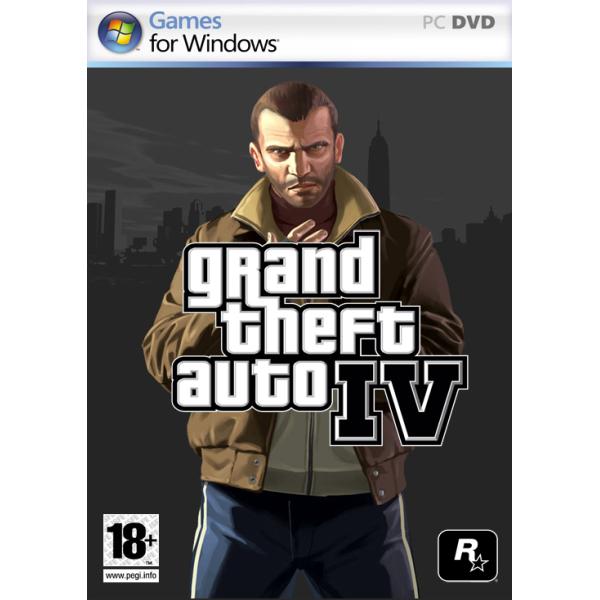
GTA IV PC


Grand Theft Auto IV on the Xbox 360 and PlayStation 3 was an undoubted triumph. The best game in the long-running series received high review scores from across the industry, and the sheer quality of the game made it easy to forget that the PC is where it all started for the franchise.

Thankfully, Rockstar has not forgotten this, and the team at its Toronto offices has been working very hard, by the looks of things, to make sure that the series' PC homecoming doesn't disappoint those fans who might have been disgruntled to see the console versions hitting shelves first.

At first glance, the game looks brighter, sharper, and more vibrant, with the development team looking to take advantage of the increased flexibility presented by the PC platform. The aim is to ensure that the game not only looks good on top-end hardware--at a maximum resolution of 2560x1600 pixels--but also runs perfectly well on three-year-old machines, according to the Rockstar staffer taking us through the demo. Recommended and minimum specifications for the game are yet to be released.


That having been said, the game features a wealth of options that allow you to optimise your machine's performance based on what you want the game to do. As well as the normal detail, lighting, and other technical settings, it's possible to change traffic density on the fly. If you know your computer struggles around really busy junctions, you can keep your settings at such a level that it keeps frame rates up most of the time and just lowers traffic density either across the board or as you enter more built-up areas. It also allows those with higher-spec machines to push the traffic levels in Liberty City up much higher than the default values on consoles, which does add an extra dimension to the city, with built-up junctions feeling even more chaotic than before.

The rig that we got to play on was running the game at 1920x1200 pixels. The work done improving textures, objects, and lighting was all immediately apparent. Trees look much better, close-up detail on surfaces look better, and above all, the lighting looks immeasurably better. The lit-up ads on the tops of cabs now really stand out as you drive through the shadows of trees, the neon displays around Star Junction have a new vibrancy, and shadows all seem much sharper, as well as more lifelike.

One other thing worth mentioning from a technical standpoint is the control scheme. It's possible to use either a mouse-keyboard combination or a joypad--or to use both, as switching between the two is seamless. Even the onscreen help prompts change simply by determining which input system you're using, without needing to change any options or settings.

Other than these relatively minor--though impressive--changes, the main point of this demo was to show off the new in-game movie editor, which is promised to integrate seamlessly with Rockstar's online services. GTAIV on the PC automatically buffers between about 30 seconds and three minutes of recent game data, depending on how much action there is going on onscreen. Simply pressing F2 saves the buffer as a file for later editing. This means that as soon as you've done something you thought looked cool, all you need to is press F2, and it'll be ready for you when you pop into the editor later on.

The editor itself is accessed via a new menu in Niko's phone and looks to have some serious potential for budding Scorseses. Entering the editor makes you leave the game proper, so you do need to make sure you've finished whichever task you were in the middle of when you captured your video before unleashing your inner cinematographer.

Opening up the editor, the controls seem very simple. The most important selection initially is the camera: You have the option of the default game view, which is exactly the view you saw as you played through the segment, the view from any of various nearby targets, several fixed angles--to Niko's right, say, or head-on--as well as a free camera. The free camera has some limitations, though. If you're within about 10 metres of Niko then it really is free, with views possible from any angle from any position inside the area. If you go out of that 10m-or-so circle, you're limited to being pointed at Niko, but you can pan and zoom out quite some distance nonetheless.


Setting up sequences of shots is just a matter of setting markers on certain frames, then telling the editor where you want the camera to be at each marker and how to transition between them. This means that you can easily set the camera to pan 360 degrees around Niko in the time it takes him to draw his weapon; for greater effect, you can even add filters to the shots or slow down time. In our time playing with the demo, we managed to get the camera moving through a shot-out cop car window as Niko gunned down the policemen hiding behind it, before swinging behind him as he loaded his rocket launcher. In our half-hour, we managed to make a fairly compelling vignette from part of a bank heist and could really see the enormous potential in the tools.

You also have complete control of the sound in any given clip, turning voices on and off at will. You can add any song on the soundtrack over the top and even push the SFX volume up to make the most of those explosions and gunfire in those dramatic moments. We were also told that it will be possible to pull clips together into longer segments, despite the limit on initial capture length.

All in all, GTAIV looks set to arrive home before Christmas in some style. Keep an eye on GameSpot as the release approaches for details on the recommended specifications, launch details, and more.

Supreme Ruler 2020: Global Crisis


Publisher: Paradox Interactive

Developer: BattleGoat Studios

Category: Strategy

Description

Economic instability, the battle for natural resources, military alliances and international relations creates a world filled with tension where the next Cold War could turn hot at any time.

There’s always something going on in the world that, thanks to human nature, can easily escalate into a conflict. We are not talking about the situation today. We are talking about a very close future depicted in the new expansion for the Geo-Political, Military Strategy game Supreme Ruler 2020 – Global crisis.

At the core of the expansion pack a whole new sandbox style campaign paints a new and far more intricate portrayal of the world of 2020 based on many of the ominous events from recent real-world headlines. The possibilities to change the underlying storyline for new play experiences are limitless.


Features

* Additional new multiplayer scenarios
* New campaign/sandbox map along a new storyline leading players towards
World War III
* New scenario features including scripted and random events
* Improved unit control and grouping
* Expanded tech tree
* New units and unit meshes
* Additional game lobby options
* Graphic improvements
* AI enhancements
* More tutorials and in-game tips
* User interface improvements

Hardware Requirements

* Global Crisis will require Supreme Ruler 2020 to play
* Windows 98/Me/2000/XP/Vista
* Pentium III 800+, 512MB RAM
* 3D Graphics Card with 16MB+ Video RAM
* DirectX 8.1 or Higher
* DirectX Compatible Sound Card

Notes

Global Crisis Is Available 12/22/08 for Digital Download Via Gamersgate and will require Supreme Ruler 2020 to Play. Supreme Ruler 2020 Was Released In June 2008.

Jumat, 21 November 2008

Warhammer Online: Age of Reckoning

Warhammer Online: Age of Reckoning—Feature Story

by John Gaudiosi

Electronic Arts purchased Mythic Entertainment a few years back because the massively multiplayer online (MMO) game developer had a proven hit with Dark Age of Camelot, as well a potential mass market license in Warhammer Online. That game, Warhammer Online: Age of Reckoning, is now unleashed to the public.

"The first thing to bear in mind is that we're not making a computer game, we're making a hobby experience," said Paul Barnett, creative director at EA Mythic during an interview at the EA Studio Showcase. "We do the three things that all hobbies provide -- skill, commitment and imagination. You can play it lightly and have a really great time or you can attempt to be the best player in the world. Our commitment is time, money and an understanding that our game is joyous and wonderful.All great hobbies trigger your imagination. We make you think about the experience when you're not playing the game."

That experience offers players six races distributed across two alliances and three frontiers. Although there's general animosity between all of the factions, out of necessity, the humans, dwarves and elves have alligned to fight the greenskins (orcs and goblins), chaos and dark elves.

"If you come and play Warhammer Online, we have the next generation of the pen-and-paper game," said Barnett. "It has more to it than any other MMO. There's more texture, it's easier to play and it has a great world. It's 25 years of gameplay packed into one experience."

Barnett said Warhammer Online offers 80 percent of what gamers are used to, sort of like an MMO Greatest Hits, but it also adds another 20 percent of new ideas and concepts like public quests and the ability to partake in player versus player experience from level 1 to level 80.

"The world of Warhammer has great depth," said Barnett. "Our game is easy to get into and devilishly hard to give up."

According to Barnett, with every new generation of MMO game, the experience becomes easier to play. That accounts for how Blizzard Interactive was able to attract such a large audience of gamers with World of Warcraft.

"More people are getting used to committing time to these types of games," said Barnett. "It's been years since WOW was out and I believe gamers are looking for something new. We want to welcome you to our wonderful world. We want every opportunity for you to get your hands on our game to see how good it is."

One of the reasons EA purchased Mythic is based on Mark Jacobs' track record with MMO games. Barnett said Jacobs, who was the lead designer of Warhammer Online, has been designing these games since the '80s.

"Dark Age of Camelot was a wonderful learning experience and wisdom generator," said Barnett. "We've taken all the best fits of what we know and incorporated them with all of the new technology now available, to make the best iteration of an MMO."

Barnett has watched as the evolution of connected social gaming has exploded from the text-based days of MUDDs to the graphical extravaganzas of Age of Conan and Warhammer Online.

One of the reasons Warhammer Online is so robust is because of the technology developed under the hood. EA Mythic created a proprietary engine for this experience, while adding several third party software packages to the mix like GameBryo. They also worked closely with Nvidia.

"Nvidia's tool support for their hardware is unsurpassed," said Colin Shannon, technical director, EA Mythic. "As a result, this has allowed us to implement several features and diagnose problems in our own graphic systems that would have been extremely difficult to do without. This has allowed us to pursue features in our product that we simply would not have had the time to do otherwise.

Shannon said gamers will especially dig the new sky and lighting systems in Warhammer Online.

"Our advanced lighting system, detailed terrain, and scalability for hundreds of figures were all made possible thanks to Nvidia's GPUs," said Shannon. "They're the gold standard for performance while developing Warhammer Online. Their tools and support are unsurpassed."

"Nvidia GPUs provide the best visual effects and performance for Warhammer Online," concurred Matt Shaw, CTO, EA Mythic. "Warhammer Online takes full advantage of the incredible performance that NVIDIA's GeForce 200 series delivers to maintain high framerate at high resolutions."

Now gamers can explore this rich world with the latest Nvidia GeForce cards.